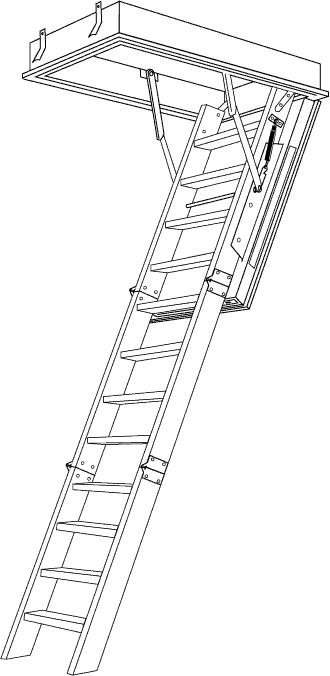
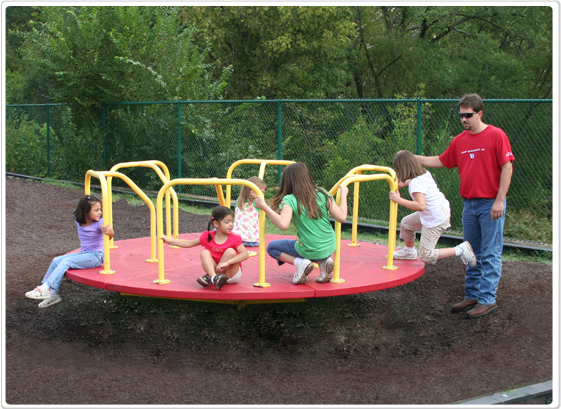
Picture of hinge action?

Hinge Action refers to the Flat Left Wrist producing that Motion by remaining Vertical to one of the three Basic Planes, i.e., Horizontal, Vertical or Angled.

Can someone draw me a picture of the statement above? The part that I am confused about is when it says vertical to the plane.Is there a different meaning to vertical than up and down?
Jerry . . . Vertical in this context means 90 degrees . . .

So horizontal hinging would be holding your left wrist vertical to the ground while you move your arm back and forth like a door to your house or a helicopter

vertical hinging would be holding your wrist vertical (90 degrees) to a vertical plane . . . your arm would move like an attic door . . .

angled hinging would be holding your wrist vertical to the inclined plane . . . like a paddle or one of them bomb shelter doors.

So the hinge pin . . .which is in your shoulder is mounted VERTICAL . . 90 degrees . . . to the plane of motion . . . but with vertical and horizontal hinges you have to have ANOTHER HINGE to lay the motion ON THE INCLINED PLANE . . that's why you have DUAL HORIZONTAL AND DUAL VERTICAL . . . dual representing two hinges . . . one hinge perpendicular to the associated plane (horizontal plane or vertical plane) and the other hinge to lay the blade of the hinge (left arm) on the INCLINED PLANE . . . See the pictures 10-10-C thru E . . . you'll see what I'm talking about . . . you DON'T need the second hinge to lay it on the plane with angled so you don't have "dual" angle . . .no need for the second hinge because the motion is already on the inclined plane.

Hinging is actually with the WHOLE ARM . . that is the full blade of the hinge . . .Homer just focused on the wrist because it could be verified in terms of what it was vertical (90 degrees) to . . . (ground, wall, inclined plane) . . . you'll note in the 10-10-C thru E pics the two theoretical hinges in the left shoulder . . . one is like a door hinge the other is like a lose nut and bolt that allows the blade of the hinge (left arm) to be laid on the plane.

but to answer your question . . . vertical is vertical to the ground with horizontal . . but 90 degrees to a wall with vertical hinging and 90 degrees to the golf plane (roof) with angled hinging . . .

Holla.
Originally Posted by 12 piece bucket Jerry . . . Vertical in this context means 90 degrees . . .

So horizontal hinging would be holding your left wrist vertical to the ground while you move your arm back and forth like a door to your house or a helicopter

vertical hinging would be holding your wrist vertical (90 degrees) to a vertical plane . . . your arm would move like an attic door . . .

angled hinging would be holding your wrist vertical to the inclined plane . . . like a paddle or one of them bomb shelter doors.

So the hinge pin . . .which is in your shoulder is mounted VERTICAL . . 90 degrees . . . to the plane of motion . . . but with vertical and horizontal hinges you have to have ANOTHER HINGE to lay the motion ON THE INCLINED PLANE . . that's why you have DUAL HORIZONTAL AND DUAL VERTICAL . . . dual representing two hinges . . . one hinge perpendicular to the associated plane (horizontal plane or vertical plane) and the other hinge to lay the blade of the hinge (left arm) on the INCLINED PLANE . . . See the pictures 10-10-C thru E . . . you'll see what I'm talking about . . . you DON'T need the second hinge to lay it on the plane with angled so you don't have "dual" angle . . .no need for the second hinge because the motion is already on the inclined plane.

Hinging is actually with the WHOLE ARM . . that is the full blade of the hinge . . .Homer just focused on the wrist because it could be verified in terms of what it was vertical (90 degrees) to . . . (ground, wall, inclined plane) . . . you'll note in the 10-10-C thru E pics the two theoretical hinges in the left shoulder . . . one is like a door hinge the other is like a lose nut and bolt that allows the blade of the hinge (left arm) to be laid on the plane.

but to answer your question . . . vertical is vertical to the ground with horizontal . . but 90 degrees to a wall with vertical hinging and 90 degrees to the golf plane (roof) with angled hinging . . .

Holla.
Great job, Bucket.

Three
Hinge Actions explained in one post.


Hinge Action . . .

A monumental concept -- Clubface Control -- that will change (and challenge) the golfing lives of all who understand it.

I've done my best to explain it in dozens of posts -- plus videos -- since 2004.

Our efforts are cumulative.

Which blow fells the oak?

Who cares?

Nice one Bucket. The word "Perpendicular" works nicely too.

I agree Jerry , pictures are best when it comes to describing geometry. Words often make matters seem more obtuse. Imagine studying high school geometry but in words only, no diagrams. If I could ask Yoda for one thing this christmas it would be for more diagrams.

Take for instance 1-L-21:

The relations of all Machine positions and motions can be described by a geometric figure.
That would be a nice wiki post for guys to add geometric figures to. Even if its pencil sketches.

Homer gave us a few diagrams, but I do wish he'd given us more. Even the geometry of the circle was not illustrated in the book. By the way, there's one right there....... the geometry of the circle , in 2D can lay flat against the Inclined Plane. Somebody could draw that easily. How 'bout the law of the triangle? Or how the bending right elbow cocks the left wrist or Single Horizontal as a non planar, cone shaped motion or or ....

Perhaps Homer thought it was all obvious?
Originally Posted by O.B.Left Nice one Bucket. The word "Perpendicular" works nicely too.


My next question was going to be, can I substitute perpendicular for vertical?

thanks everybody- I am not giving up on this hinge concept.
Originally Posted by jerry1967 My next question was going to be, can I substitute perpendicular for vertical?

thanks everybody- I am not giving up on this hinge concept.
No problem, Jerry.

In fact, when I choose to discuss these things with students . . .

I use the term perpendicular (relationship of the Flat Left Wrist to one of the Three Associated Planes) all the time. But, only after I've used the term Vertical, and then only because students relate more easily to perpendicular than to vertical. And then I explain the difference.

Now, why all the bother?

Assuming an intelligent golfer who wants to know -- indeed needs to know -- the answer is simple . . .

In the constructive vocabularly of The Golfing Machine, the term Perpendicular relates to the Wrists' overall up-and-down plane of Motion (Level, Cocked and Uncocked). The term Vertical relates to the mid-condition of the side-to-side Rotational Motion (Vertical, Turned and Rolled).

Then, answering your question here, when we relate the Left Wrist to a given Plane of Motion -- Horizontal, Vertical or Angled -- we can do so in its Rotational frame of reference. Namely, Vertical, i.e., neither Turned nor Rolled.

Hence, Vertical to the Ground (a Horizontal Plane) describes the mid-condition of a Rotational Motion, not Level, the mid-condition of a Perpendicular Motion.

Screwy stuff, I know. But when you're a teacher helping your student get results . . .

Precision matters.

The Wrists have Three Planes of Motion (Horizontal, Perpendicuar and Rotational). Within these are three sets of three -- Flat, Bent and Arched; Level, Cocked and Uncocked; Vertical, Turned and Rolled -- with the first term indicating the mid-condition within each Plane.

Most of the time, except as he needs to on this particular day, the student never knows.

But, the teacher knows.

And, so does the Ball.

That's a good thing!

Originally Posted by Yoda Which blow fells the oak?
How 'bout this translation?

Vertical hinge: No roll
Angled hinge: Half roll
Horizontal hinge: Full roll (90*)

- on the inclined plane.
Originally Posted by BerntR How 'bout this translation?

Vertical hinge: No roll
Angled hinge: Half roll
Horizontal hinge: Full roll (90*)

- on the inclined plane.
Does the body pivot cause this full roll or is it the forearms?
Originally Posted by jerry1967 Hinge Action refers to the Flat Left Wrist producing that Motion by remaining Vertical to one of the three Basic Planes, i.e., Horizontal, Vertical or Angled.

Can someone draw me a picture of the statement above? The part that I am confused about is when it says vertical to the plane.Is there a different meaning to vertical than up and down?
Jerry, I too would appreciate the picture you requested but for some unknown reason there is a reluctance to depict something regarded as so critical. Plenty of words but still no pictures.
Originally Posted by strav Jerry, I too would appreciate the picture you requested but for some unknown reason there is a reluctance to depict something regarded as so critical. Plenty of words but still no pictures.
Homer's WHOLE point in this was to SYSTEMATICALLY and GEOMETRICALLY control CLUBFACE MOTION...

The clubface can ONLY make 3 motions...period....respectively each motion has an associated PLANE OF MOTION
1. CLOSE ONLY-motion of the clubface in the Horizontal Plane only (no layback)
2. LAYBACK ONLY-motion of the clubace in the Vertical Plane Only (no closing)
3. CLOSE AND LAYBACK-Motion on an Angled Plane...(closing and layback SIMULTANEOUSLY)

Hinge Pin always vertical to the "associated" Plane...there are 3...Vertical, Angled (of which there are "infinite" varieties) and Horizonta...so of the 3 Basic Planes there is ONE Vertical, One Horizontal and many Angled....

So you can see how the motion would work if you positioned the pin at 90 degrees to the plane of motion you select....


True Vertical (trap door movement...or attic door)...so the plane is VERTICAL so the hinge pin by definition is position vertical (at 90 degrees) to the associated plane in this case the plane is VERTICAL the hinge pin is positioned at 90 degrees thus horizontal...


Horizontal ... the plane is horizontal...parallel to the ground ...thus the hinge pin is positioned at 90 degrees to the plane of motion thus vertical to the ground...


Angled Hinging....pin positioned at 90 degrees to the selected Angled Plane...

Originally Posted by strav Jerry, I too would appreciate the picture you requested but for some unknown reason there is a reluctance to depict something regarded as so critical. Plenty of words but still no pictures.
Here's the basic....


http://www.youtube.com/watch?feature...&v=sGtV0ja-6Tg

Couldn't figure out how to get the video to show up...but you can click it...
So now that you got your clubface motions on the Basic Planes...obviously you play golf on an INCLINED PLANE...so you have to get these motions on the INclined Plane....

The hinge is at the left shoulder....the blade is the entire left forearm flying wedge.....but the focus on the flat left wrist...that is the portion of the "blade" that you focus on to execute your hinge motion...

Angled Hinging is conceptually easy to get...you just postion the pin vertical to the inclined plane and boom you got it...


But with motion in the Horizontal Plane and Vertical Plane... it's different you gotta get these MOTIONS to HAPPEN ON THE INCLINED PLANE....thus you gotta have TWO HINGES....ONE THAT SETS UP THE BASIC PLANE OF MOTION...AND ONE THAT ALLOWS THAT MOTION TO BE LAID OR PLACED ON THE INCLINED GOLF PLANE...

NOTE THE TWO HINGES ON THE BASIC MACHINE....THE ANGLED HINGE IS RESPONSIBLE FOR LAYING THE BLADE (CLUBSHAFT) ON THE FACE OF THE PLANE...AND THE SECOND HINGE IS RESPONSIBLE FOR THE ACTUAL HINGE MOTION...


YOU HAVE TO HAVE DUAL HORIZONTAL AND DUAL VERTICAL....REASON FOR DUAL IS IT REQUIRES TWO HINGES TO GET THE BASIC PLANE OF MOTION TO BE PERFORMED ON THE INCLINED PLANE....


NOTE THE TWO HINGES AT THE SHOULDER JOINT...THE BASIC PLANE OF MOTION HINGE AND THE "ANGLED" HINGE THAT IS RESPONSIBLE FOR PLACING THAT BASIC MOTION (HORIZONTAL OR VERTICAL) ON THE INCLINED PLANE...
Thank you for your time and effort.
Great posts 12 piece bucket ! I love the video too.
Mike O sent me a photo of the Three Basic Planes a few years back when I was just getting into TGM . HOpe he doesn't mind me sharing. He made sure I got things right.

Great guy, very helpful.

Now if you need help with Triple Horizontal just email Daryl........luv you D.

[attachment unavailable]